
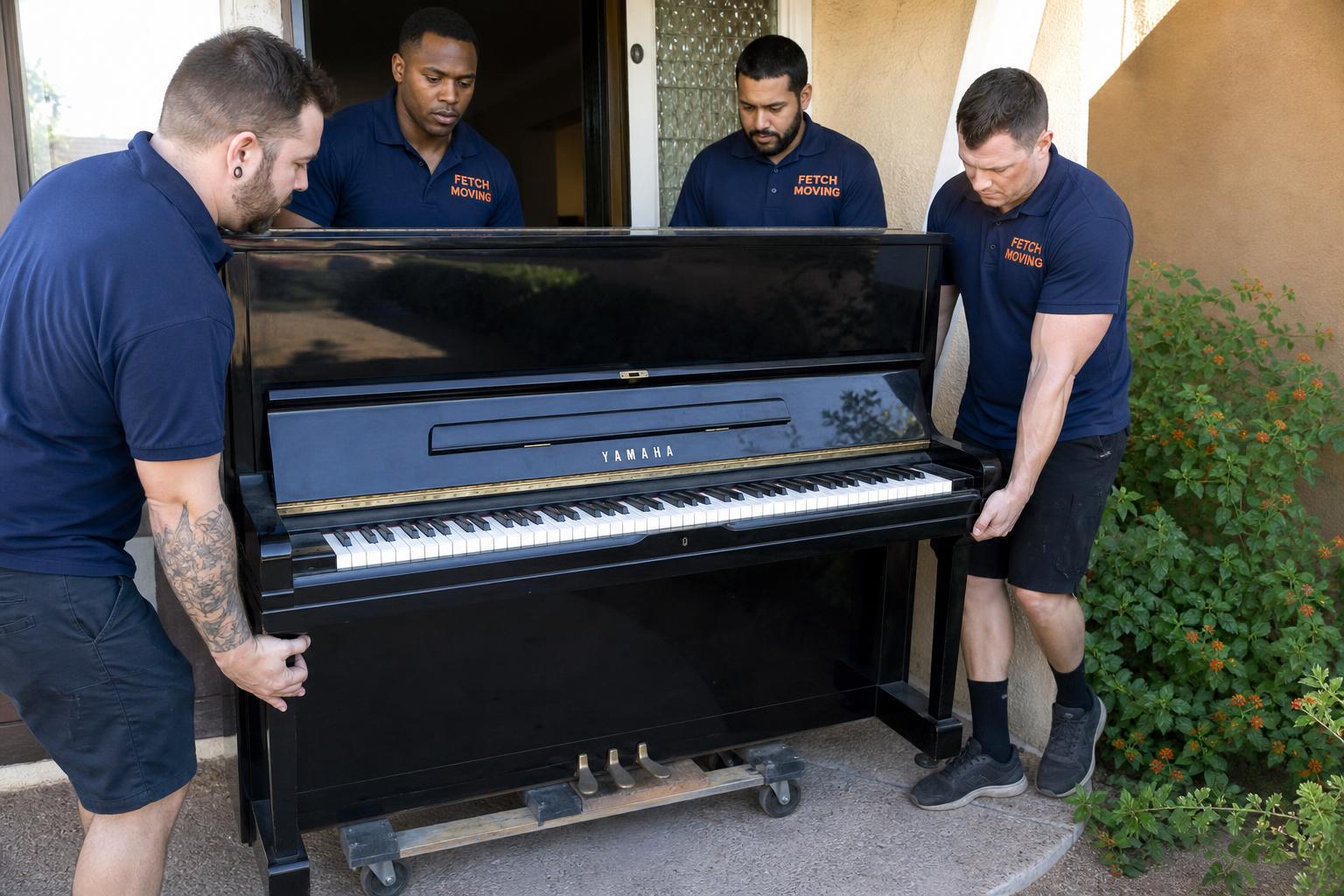
You're standing next to a 600-pound piano and a flight of stairs trying to figure out how this is supposed to work. Maybe other movers said no. Maybe a friend with a dolly is sounding less and less like a good idea. You're in the right place. Fetch Moving runs a dedicated piano crew for uprights, grands, and digital pianos across the Tucson metro — with the right gear, a flat upfront price, and a real person on the phone whenever you call.
Signs You Need Piano Moving
A few signs you need a real piano mover: your piano weighs more than 300 pounds, it has to go up or down stairs, it has to come off or onto a truck, or you have a baby grand or full grand with detachable legs and a lyre. If the piano has any sentimental or monetary value, that's the biggest sign — the cost to repair a damaged action, soundboard, or finish is almost always more than a professional move would have been.
Waiting and DIY don't pair well with pianos. People hurt their backs, dent the case on doorways, drop the piano on tile floors, or knock the instrument so far out of tune that a full pin block rebuild is the only fix. A trained piano crew with the right boards, straps, and dollies is cheaper than one bad lift.
Our Piano Moving Options
Most of our piano moves follow the same proven process. We wrap the piano in moving pads and shrink wrap, secure the lid and pedals, strap it onto a piano board or dolly, and navigate doorways, hallways, and stairs as a team. Then we load it onto a truck with soft straps, drive it carefully to the new location, and reset it on its final spot.
Upright piano moves are the most common — spinets, consoles, studio uprights, and full uprights. Grand pianos take more crew, a piano board, leg removal, and a careful reassembly at the new home. Digital pianos and keyboards are lighter but still get wrapped and braced so the keys and electronics don't take a hit. We handle player piano mechanisms, antique uprights with delicate cases, and modern Yamaha and Kawai grands alike.
When the piano has to travel across state lines, our Long Distance Piano Moving service adds custom crating, climate-aware transport, and a secured tie-down so the action and finish make it intact. Long-distance piano moves usually pair with a full household move — see our Long-Distance Moving page for the full picture.
Piano Moving for Tucson Homes and Studios
Tucson has piano-moving quirks that matter. Foothills homes often have sunken living rooms, tile floors, and narrow turns at the top of the stairs. Downtown 85701 rentals have historic doorways that weren't built for a 6-foot grand. Marana and Vail are spread out, which adds drive time. SaddleBrooke has dozens of homeowners downsizing pianos every year, and we're often the crew called to move them.
Climate matters with pianos. Summer heat in the back of a truck can damage felts and glue if the piano isn't transported quickly and in shade. Monsoon storms between July and September can soak a case in minutes. Desert dust can get inside the action. We plan around the weather and wrap thoroughly so none of that touches your instrument.
What to Expect
Call us with the piano type, the pickup and delivery addresses, and any stairs or tight turns. We give you a flat upfront price on the spot — no hidden fees and no per-stair charges. On move day, a trained crew arrives with piano boards, straps, dollies, and pads. We protect the floors, wrap the instrument, and walk it out together. At the new home, we set it on the final spot. We always recommend a piano tuning a week or two after the move once the instrument settles.
Why Choose Fetch Moving for Piano Moving
Fetch Moving is licensed and insured in Arizona, family-owned, and has built a 5-star Google reputation on the moves other crews won't take. Piano moves are flat-rate and upfront — no surprise add-ons. A real person answers the phone 7 days a week and we book same-day piano moves whenever we can fit them in. If anything isn't right when we leave, we make it right.
Upright, Spinet, and Grand Pianos Each Move Differently
Quick Summary: Spinet, upright, and grand pianos all move differently because their weight sits in different places. Grand pianos need partial disassembly and a different dolly setup than uprights, which is why they usually cost more to move.
A piano is more than just heavy — its weight is distributed in an unusual way. Spinets and consoles are the lightest, usually under 400 pounds, and move on their legs the whole way. Upright pianos, the tall ones against a living-room wall, carry most of their weight up high, which makes them top-heavy on stairs and risky without the right straps and a board underneath. Grand pianos are a different process entirely: the legs come off, the lid gets padded and secured, and the whole piano is tipped onto a padded board, strapped down, and rolled out flat.
- Spinet or console: lightest, moves upright, fewer hands needed
- Upright or studio piano: tall and top-heavy, needs stair straps and careful balance
- Baby grand: legs and lyre removed, moved flat on a padded board
- Full grand: same process as a baby grand, just heavier and slower going
The piano type drives the price, but so does what's around it — a grand in a home with a sunken living room, or an upright at the top of a narrow staircase, changes the whole plan. Stairs, tight doorways, and long carries add time no matter the piano.
A Keyboard or Digital Piano Doesn't Need a Specialty Mover
We'll tell you straight, even if it costs us the job: not every keyboard needs a piano-moving service. A 61-key digital keyboard or a small stage piano usually weighs under 30 pounds — you can wrap it in a blanket and set it in the back seat. That's not piano moving, that's carrying something light.
How do you know which you have? Look at what it's sitting on. A full-size upright, spinet, console, or grand with real wooden cabinetry and cast-iron plating inside is a different item entirely — those run from 300 to over 1,000 pounds. A digital keyboard on a folding stand isn't in that category, no matter how nice it sounds.
- Weighs under 50 pounds and one person can lift it alone
- Sits on a stand, not built-in legs or a cabinet base
- No cast-iron harp or strings inside the body
- Fits through a standard doorway without tilting
If your instrument checks those boxes, save your money — move it yourself, or add it to a general load if you're already using our furniture moving or small-moves service. But if it takes two or three strong people just to rock it an inch, this is a real piano move.
Desert Heat and Monsoon Season Add Real Risk to Piano Moves
A piano sitting in a hot truck or on a driveway for even twenty minutes can take damage you won't see right away — wood veneer warps, glue joints loosen, and tuning pins shift when the temperature swings that hard, that fast. This is especially true with midday summer moves when pavement temps climb past what the finish can handle. Then monsoon season, usually July through September, brings the opposite problem: humidity spikes fast, and moisture swells the soundboard, warps keys, and invites rust on strings and pins.
- Morning or evening moves avoid peak pavement and cabin heat
- Covered transport protects against sudden monsoon downpours
- Padding and blankets cushion the piano and buffer temperature swings
- A quick weather check before moving day is basic prep
None of this means you can't move a piano in a Tucson July — it means the crew needs to plan around the heat and the storms rather than just showing up and loading.
Stairs, Tight Doorways, and Tile Floors Change the Plan
Every piano job starts with the same questions: where does the truck park, how many steps to the door, is there a turn halfway up the stairs? Many older Tucson homes near the central corridor have narrow hallways and tight 90-degree turns a grand piano was never built for, so we measure doorways before we ever pick up a leg. Stairs are the biggest cost driver — a piano on a single flight with a straight shot is a different job than one with a switchback landing. Tile floors, common in Tucson homes built for the heat, scratch and crack under a piano's concentrated weight without the right dolly and floor protection.
- Narrow interior doorways or hallway turns
- Multiple flights of stairs or a landing with a turn
- Tile, hardwood, or uneven flooring that needs protection
- Long carries from the truck to the front door
- Disassembly needs, like removing legs or the top lid — the same specialty handling we bring to safes and oversized items
Not sure if your place is tricky? Tell us about the stairs and doorways when you call and we'll walk you through what to expect before move day.
How Piano Moving Pricing Works
Piano moving isn't priced like a standard two-movers-and-a-truck job — there's no flat two-hour minimum, because the instrument and the access drive everything. Most piano moves run between about $250 and $600. If we're already handling your household move and the piano is part of that job, it's usually at the lower end, closer to $250. If you're calling us just to move the piano on its own, it's usually toward $500 to $600, and sometimes more for a heavy grand with tough access.
What moves the price within that range:
- Piano type — a spinet, an upright, and a 9-foot grand all handle differently
- Access — stairs, narrow hallways, tight turns, and long carries from the truck to the door
- Disassembly — some grands need legs and lid removed before the move
- Whether it's part of a larger move or a standalone piano job
Because so much depends on the piano and the path, the most accurate number comes from a few details or a quick look. Tell us the piano type, the addresses, and any stairs or tight turns, and we'll give you a guaranteed flat-rate price — no hidden fees, no per-stair charges. We also recommend a tuning a week or two after the move, once the instrument settles.
Piano Moving FAQs
How much does it cost to move a piano in Tucson?+
Most piano moves run about $250 to $600. If it's part of a household move we're already doing, it's usually near $250; if it's a standalone piano move, it's usually $500 to $600, more for a heavy grand with tough access. Stairs, narrow doorways, and tile floors all add time. Tell us the piano type and the path and we'll give you a guaranteed flat rate.
Can I move my piano myself?+
You can, but pianos are heavier and more awkward than they look. An upright can top 400 pounds with most of the weight up high, making it top-heavy on stairs, and grands need the legs removed and strapped to a padded board. Without the right straps, dollies, and extra hands, it's easy to damage the piano or hurt yourself.
Do digital keyboards need a specialty piano mover?+
No — most digital keyboards don't. If it weighs under 50 pounds, sits on a folding stand, and one person can lift it, you can move it yourself or add it to a regular furniture move. Real piano movers are for upright, spinet, and grand pianos with wooden cabinets and cast-iron plating, which run from 300 to over 1,000 pounds.
Is it safe to move a piano during a Tucson summer or monsoon?+
Yes, but timing and handling matter. Pavement heat can warp veneer and loosen glue joints if a piano sits on a driveway too long, and monsoon storms bring sudden rain and humidity. We plan moves for morning or evening and keep the piano covered and padded in the truck to protect it from both heat and moisture.
How do movers get a piano down stairs or through a narrow hallway?+
We measure the doorways and the path before touching the piano. Many older Tucson homes have narrow hallways and tight 90-degree turns, so depending on the space we may remove the legs and roll a grand flat on a padded board, or use stair straps to keep an upright balanced on the way down.
Do tile floors cause problems when moving a piano?+
They can — tile common in Tucson homes can scratch or crack under a piano's concentrated weight if the wrong equipment is used. We use dollies built for that load along with floor protection so the piano moves smoothly without damaging your tile.